
Many of eastern Massachusetts’ most architecturally significant historic homes were constructed with natural quarried slate roofing systems between the late 1800s and early 1940s.
Historic estate communities throughout Wellesley, Weston, Dover, Needham, Newton, Brookline, and Winchester contain large concentrations of Colonial Revival and historic estate architecture where slate roofing is a defining design feature.
As these roofs approach 70–100 years of service life, many homeowners are choosing synthetic slate roofing manufactured by Brava Roof Tile to preserve architectural authenticity without the structural burden of natural stone slate replacement.
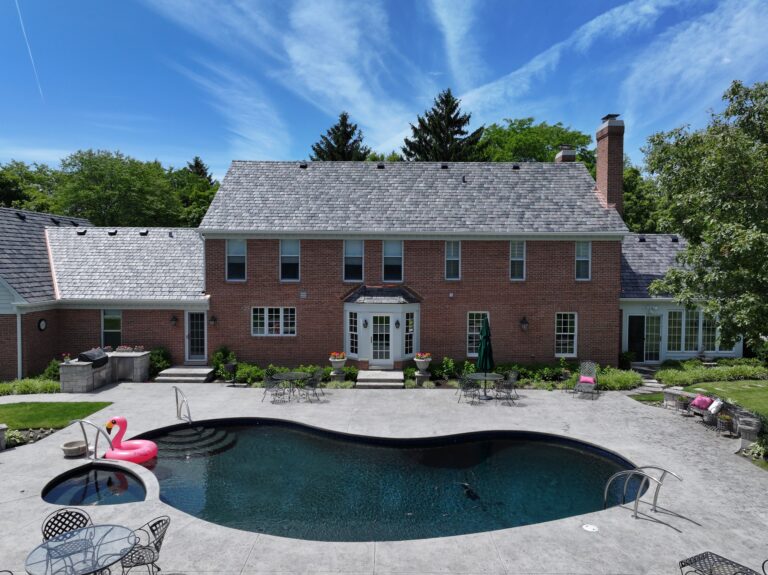
Traditional quarried slate is extremely heavy and often requires structural evaluation before replacement.
Full natural slate replacement may involve:
For historic estate neighborhoods such as Cliff Estates in Wellesley, Wellesley Farms, and heritage streets near Newton Centre, maintaining historic appearance while minimizing reconstruction work is a primary objective.
Composite slate roofing provides a practical preservation solution.
Modern composite slate tiles are manufactured using polymer mineral composite technology engineered to replicate the visual depth and dimensional character of natural quarried slate.
Architectural construction features include:
Because synthetic slate roofing is substantially lighter than natural stone, many historic homes can undergo roof replacement without major structural reinforcement.
Eastern Massachusetts homes experience aggressive seasonal weather stress.
Composite slate roofing is engineered for regional durability with:
These characteristics are especially valuable for larger historic estate roofs that may exceed traditional residential roof surface sizes.
Impact-resistant roofing materials achieving Class 4 certification may qualify some homeowners for insurance consideration depending on carrier policies.
Storm-resistant roofing is particularly relevant for large historic homes exposed to wind-borne debris during severe Massachusetts weather events.
Premium composite slate roofing systems from Brava Roof Tile typically include a 50-year limited warranty covering product defects and performance failure risks.
For historic estate property owners, extended warranty coverage helps support long-term preservation investment decisions.
Historic slate roof replacement can be a major capital project for Massachusetts homeowners.
Through programs such as advanced financing options, qualified buyers may install architectural-grade roofing systems while maintaining manageable payment structures.
If your historic home has an aging slate roof but you want to maintain authentic Colonial Revival or estate architectural appearance, synthetic slate roofing may be the ideal preservation solution.
Professional evaluation is recommended for homes throughout eastern Massachusetts historic neighborhoods including Wellesley, Weston, Dover, Needham, Newton, Brookline, and Winchester.
Many affluent Massachusetts communities maintain strict historic preservation standards.
Synthetic slate roofing is often approved because it replicates traditional stone slate appearance while providing consistent color blending and installation uniformity.
Historic and architectural review neighborhoods where composite slate replacement is increasingly common include areas within Newton, Wellesley, and Dover.
For homeowners working with preservation boards, synthetic slate roofing often provides the optimal balance between historic character and modern performance engineering.
Yes. Many Massachusetts architectural review boards approve composite slate because it replicates traditional quarried slate appearance.
In many cases, no. Composite slate is significantly lighter than natural stone slate.
High-quality composite slate roofing systems are engineered for multi-decade durability under New England climate conditions.
If your home is located within the eastern Massachusetts estate corridor and you are considering slate or cedar roof replacement, our team offers private property evaluations for synthetic composite roofing installation.
Consultation includes: