
If you recently installed a new roof in Eastern Massachusetts, including areas like Boston, Stoughton, Needham, Dover, Medfield, Norfolk, or Westwood, and you are seeing ice dams, icicles, or leaks, you are not alone. Many homeowners are surprised that even brand-new roofing systems can experience winter issues.
Understanding why ice dams form, why they affect new roofs, and what to do about them is essential for protecting your home. This guide provides a complete overview of ice dam causes, roof system limitations, and effective prevention strategies for Massachusetts homeowners.
An ice dam is a ridge of ice that forms at the edge of a roof, usually along gutters and eaves. Ice dams occur when:
Common consequences of ice dams include:
Even brand-new roofs installed perfectly to manufacturer-approved roofing systems and Massachusetts building codes can experience ice formation if attic heat loss or extreme winter weather is present.
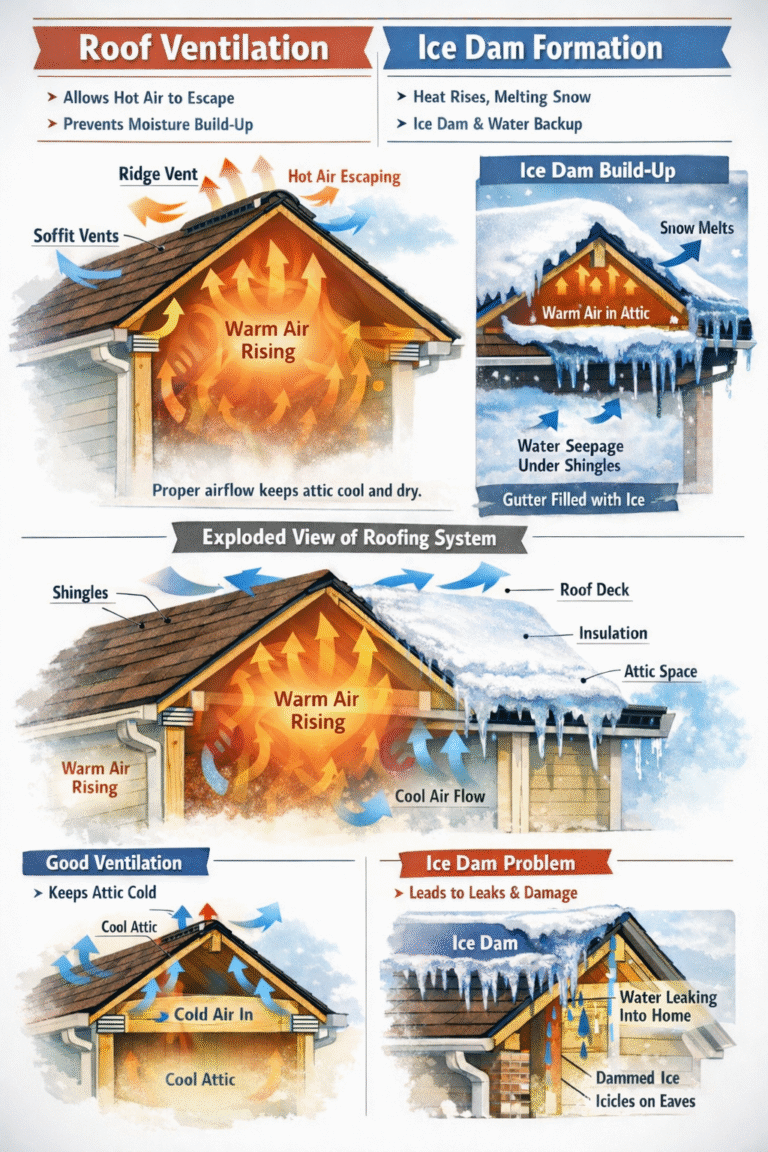
Ice dam formation is driven by temperature imbalance, not poor roofing installation. Major contributing factors include:
Warm air escaping into the attic creates uneven roof deck temperatures. Common sources are:
Even minor leaks can create hot spots where snow melts prematurely. Upgrading attic insulation and sealing leaks can significantly reduce heat loss.
Roof replacement does not automatically improve insulation. Insufficient R-values allow heat to escape into the attic, increasing snow melt and freeze-thaw cycles. Learn more about attic insulation upgrades.
Even code-compliant ventilation can underperform if:
Proper roof and attic ventilation solutions ensures consistent roof deck temperatures and reduces ice dam risk.
Eastern MA winters often include:
Heavy, wet snow
Coastal moisture and nor’easters
Rain-on-snow events
Freeze and thaw cycles
These conditions can overwhelm even the best-installed roofing systems. Homeowners in Stoughton, Needham, Medfield, and surrounding towns frequently report ice dam concerns despite having new roofs.
Check out our roof damage identification guide for tips on spotting early issues.
Use Calcium Chloride to Create Drainage Channels
Calcium chloride pellets that are roof-safe help relieve water pressure and gradually melt ice.
Important Notes:
For detailed guidance, see our Ice Dam Removal Services page
❌ Using rock salt, which damages shingles and gutters
❌ Hammering or chipping ice
❌ Climbing on an icy roof
❌ Relying solely on heat cables
Preventing ice dams requires a whole-home approach, not just quality shingles. Steps include:
They are possible, especially in Eastern Massachusetts winters with heavy snow and freeze and thaw cycles
While a new roof prevents leaks, it cannot stop ice formation caused by heat loss or temperature fluctuations
Yes, if you notice leaks. Most ice dam issues involve attic insulation and ventilation rather than roof installation errors
Depending on thickness, it can take several hours to create effective drainage channels. Patience is key to prevent roof damage. For step-by-step guidance, visit our Ice Dam Removal Services page.
If you installed a new roof in Eastern Massachusetts and are seeing ice dams or leaks:
By improving insulation, air sealing, and ventilation, and monitoring snow loads, homeowners can reduce ice dam risk and protect their new roof investment.
Learn more about solutions in Roof Replacement Services and Attic Insulation Services.