
For generations, owning a home in Massachusetts has represented stability, opportunity, and a foundation for building wealth.
A home was where families started. Where children grew up. Where memories were created. Where future generations hoped to return.
But today, many Massachusetts families are facing a growing challenge: The communities they love are becoming increasingly difficult to afford.
Young adults who grew up here are struggling to purchase their first home. Families are searching for more affordable options without leaving the towns they know. Older homeowners are wondering how their children and grandchildren will ever be able to build the same foundation they once had.
This has created an important conversation around one question: Can Massachusetts create more opportunities for homeownership while protecting the value and character of existing neighborhoods?
One solution being discussed is the creation of more starter homes. But what does that actually mean?
And perhaps more importantly: How could starter homes impact current homeowners and the future value of Massachusetts communities?
A starter home is typically a smaller, more attainable single-family home designed for buyers entering the housing market.
These homes are often:
Starter homes are not about replacing neighborhoods with large developments.
The concept is about creating more housing options that allow people at different stages of life to remain connected to the communities they call home.
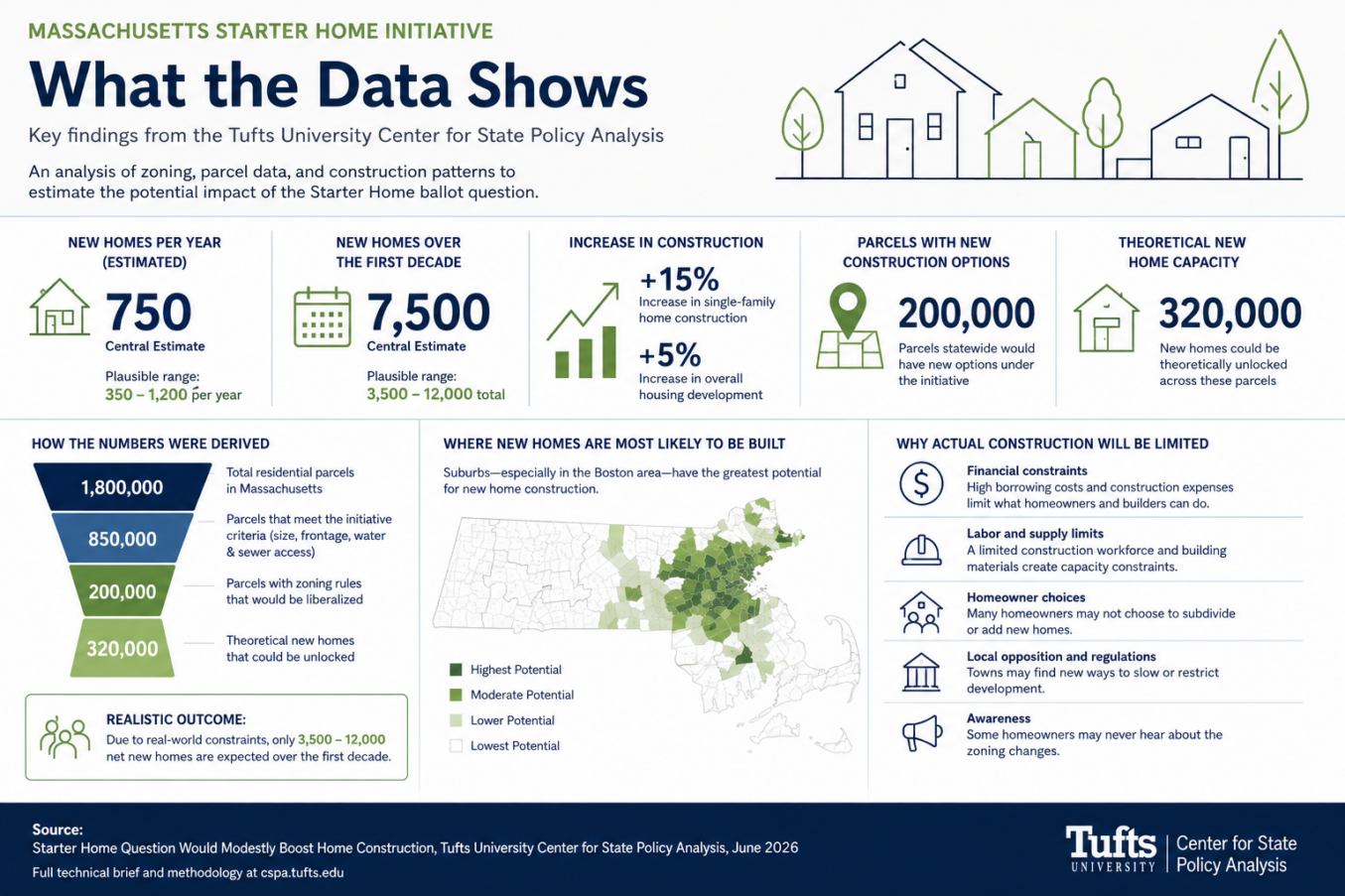
A recent analysis from the Tufts University Center for State Policy Analysis examined the potential impact of Massachusetts’ proposed “Starter Home” initiative.
The research analyzed municipal zoning information, parcel data, infrastructure availability, and historical construction patterns to estimate how many additional homes could realistically be created.
The findings suggest that the initiative could result in approximately:
However, the research makes an important distinction:
Potential does not equal immediate development.
Many factors influence whether homes are actually built, including financing costs, construction availability, homeowner decisions, and local approval processes.
This is one of the biggest questions homeowners have.
The short answer:
Thoughtfully planned housing growth does not automatically reduce property values.
Home values are influenced by many factors:
A community with no pathway for new residents can eventually face challenges.
Why?
Because communities depend on people.
Teachers, healthcare workers, business owners, first responders, entrepreneurs, and young families all need places to live.
When communities can attract new generations of homeowners, they remain active, desirable, and economically healthy.
The goal is not simply building more houses.
The goal is building communities that remain valuable for decades.
A neighborhood’s value is connected to its long-term stability.
Communities that continue to attract residents, businesses, and investment tend to remain more desirable.
Thoughtful housing growth can help ensure towns do not become places where only existing homeowners can afford to live.
Massachusetts has many communities where multiple generations want to stay close.
A young adult may want to purchase a first home near parents.
An aging homeowner may want family nearby.
A family may need a smaller home option while remaining connected to their town.
More diverse housing choices can create opportunities for families to stay together.
For some homeowners, changing housing needs may create opportunities.
A larger lot may have future potential for:
The Massachusetts starter home analysis found that many parcels could theoretically support additional housing opportunities if zoning restrictions changed.
That does not mean every homeowner will build.
It means communities may have more options.
One of the biggest housing trends shaping the future is multigenerational living.
Families today are thinking differently about housing.
Instead of every generation living completely separately, more families are exploring options that allow:
Starter homes, accessory dwelling units, and thoughtful zoning changes are all part of a larger conversation about how Massachusetts communities adapt to changing family needs.
There is no single solution to Massachusetts’ housing challenges.
Starter homes alone will not solve affordability.
But neither will ignoring the problem.
The future requires balance:
Protecting the neighborhoods people love while creating opportunities for future generations.
Preserving the character of communities while allowing them to evolve.
Maintaining home values while ensuring homeownership remains achievable.
The strongest communities are not frozen in time.
They are communities that adapt while protecting what makes them special.
The conversation around starter homes is ultimately not just about construction.
It is about opportunity.
It is about whether the next generation can build a life in the same communities that shaped them.
It is about creating neighborhoods where families can grow, homeowners can build wealth, and communities can remain strong.
Housing is more than square footage and property lines.
It is about people.
And the decisions Massachusetts makes today will influence what homeownership looks like for generations to come.
A starter home is generally a smaller, more attainable single-family residence designed for first-time buyers, young families, downsizing homeowners, and individuals entering the housing market.
Not necessarily. Property values depend on many factors, and thoughtfully planned housing growth can strengthen communities by supporting demand, local investment, and long-term neighborhood stability.
The Tufts analysis estimates approximately 750 new homes per year, with a possible range of 350 to 1,200 annually depending on market response and development conditions.
No. The proposal changes what may be possible under certain conditions, but homeowners would still decide whether they want to pursue additional construction opportunities.
Starter homes can create more pathways to ownership, help younger generations remain near family, and provide additional housing flexibility as families’ needs change.
At Reliable Roofing, Siding & Windows, we believe homes are more than exterior walls and roofs. They are where families build memories, create stability, and invest in their future.
As Massachusetts communities continue to evolve, we believe thoughtful conversations about housing, home improvement, and long-term property value are important for every homeowner.
Your Home. Our Promise. Reliable.